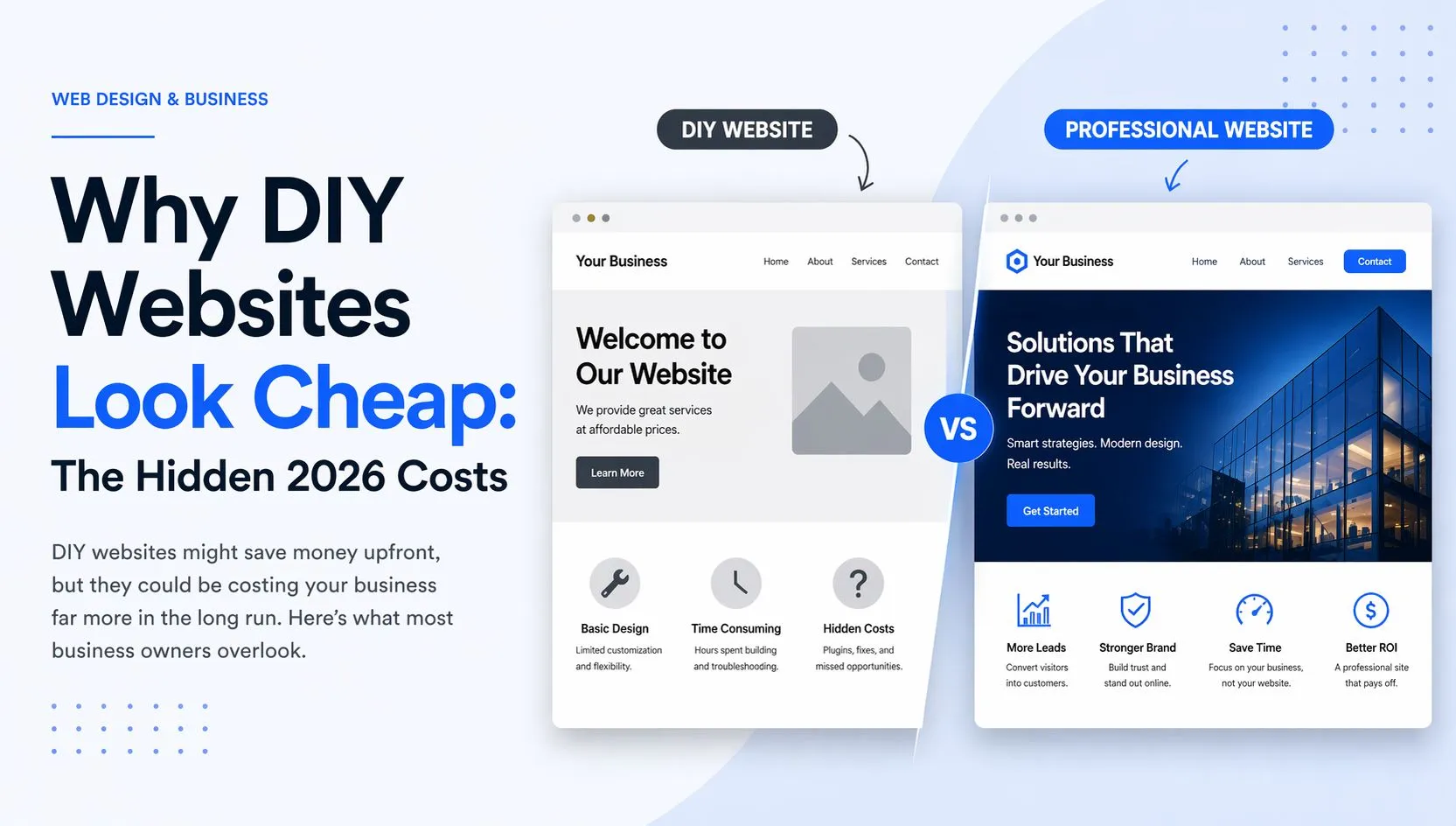
Why DIY Websites Look Cheap: The Hidden 2026 Costs
DIY websites feel like a smart way to save money, but hidden costs show up later. Learn why cheap-looking sites lose trust, leads, and premium customers.
DIY websites look cheap at first.
The bill shows up later.
Every week, I talk to business owners who tell me the same thing.
"I built the website myself to save money."
I never judge that. I get it.
If you run a local business, every dollar matters. That money goes to payroll. It goes to tools. It goes to equipment. It helps put food on the table. A lot of owners depend on this money to survive, to support their families, and to keep things running.
So protecting cash with a DIY website makes sense.
This is personal for me. I grew up in a family without a lot of resources. I also come from a family of small business owners. I know what it feels like to work harder for opportunities that other people just walk into. That is a big reason I built WeGotSites.
Before this, I spent years in tech, startups, SaaS, and AI. I worked with mid-market and enterprise companies. I saw how powerful the right systems, technology, and data can be. I also saw how small businesses rarely get access to those same advantages.
That gap matters.
So when I talk about DIY websites, I am not criticizing the choice. I am pointing out the hidden costs that do not show up on your credit card.
They show up somewhere else.
They show up in lost trust. They show up in missed calls. They show up in premium customers quietly leaving. They show up in wasted time.
And in 2026, this problem is only getting bigger.
Why DIY Feels Smart at First
DIY platforms sell a simple promise.
Drag. Drop. Launch.
And to be fair, that part works. You can get a site live quickly.
The problem is what happens after.
Being online is not the same as getting customers.
A lot of business owners expect the site to start doing something. Bringing in calls. Making them look more professional. Creating opportunities.
Then nothing changes.
The slow failure nobody talks about
Month one feels exciting.
The site goes live. Friends and family say it looks good. There is momentum.
Month two feels confusing.
The calls stay the same. Leads do not improve. So the owner tweaks things. Headlines. Photos. Sections.
Month three is where frustration shows up.
"I thought I would at least get a few calls by now."
That is the hidden cost.
DIY does not fail instantly. It fades quietly until the owner stops trusting it.
Cheap Gets Decided Fast
When I say a site looks cheap, I do not mean it needs to be flashy.
Simple websites can win.
But they need to build trust fast.
A study found users form an opinion in about 50 milliseconds. Another found that 46.1% of credibility comes from visual design.
That first impression matters.
Cheap usually shows up like this:
- Generic layout
- Cluttered sections
- Slow load speed
- Messaging focused on the owner, not the buyer
- Template-like feel
If your homepage starts with “Welcome to our website,” you are wasting your most valuable space.
Your homepage has one job.
Can you solve my problem? Do you serve my area? How do I contact you right now?
That is the 30-second test.
And use real photos.
Stock images do not build trust. Real work does.
The Most Expensive Losses Are Invisible
The biggest losses are not complaints.
They are silent exits.
Premium customers do not tell you why they left. They just move on.
That is what makes this expensive.
You never see it happen.
I have seen businesses attract only price shoppers because their website felt cheap. After improving messaging and visuals, they started attracting higher-quality clients.
Same service. Different perception.
I have also seen companies with decades of experience lose to newer competitors with better websites.
That is how buying works now.
A referral starts the conversation. Your website finishes it.
If you are relying on word of mouth, that is a great sign. It means you do good work.
But today, people still verify.
They compare.
And the business that builds the most confidence wins.
Mobile Friction Is Quietly Killing Calls
Most local buyers are on their phones.
That changes everything.
BrightLocal found that 61% of mobile users are more likely to contact a local business. The same research shows 52% of users care about seeing an address, and 38% get put off without a visible map.
Speed matters too.
Amazon found that every 100 milliseconds of delay costs about 1% in sales.
A slow site creates doubt.
A slow site makes people leave.
A slow site makes your business look unreliable.
That is one of the biggest issues with drag-and-drop templates. They are built for ease, not performance.
Too much code. Too many assets. Too much bloat.
You do not need more features.
You need more clarity.
Wegotsites
Start My Free Website Preview
Takes ~2 minutes. No commitment. No credit card required.
Start My Free Website PreviewNo commitment. No credit card required.
Google and Reviews Still Decide a Lot of This
Launching a site is not the finish line.
It is the starting point.
Google needs clear signals:
What do you do? Where do you do it? Why should anyone trust you?
Most DIY sites do not answer those well.
Then visibility suffers.
Reviews matter even more now.
BrightLocal found that 97% of consumers read online reviews, and 41% always read them. The average person checks six different platforms.
That means your business is always being compared.
So build a simple system.
Ask for reviews right after the job. Make it easy. Use QR codes if needed. Keep it natural.
That is how you get Google reviews without forcing it.
DIY Also Steals Time You Never Get Back
DIY is not free.
You pay with time.
Nights. Weekends. Frustration.
Most owners are not experts in websites. They are experts in their craft.
Time spent fighting layouts, forms, and settings is time not spent growing the business.
Then comes maintenance.
Domain. Hosting. SSL. Updates. Fixes. Backups.
It never really ends.
I have seen owners spend money fixing bad work too.
One client wasted $600 on a poor agency site. Another had a nephew-built site that quietly damaged their brand for years.
That is the risk.
Not just cost.
But being wrong.
Why I Built WeGotSites Around This Problem
That is why I built WeGotSites differently.
I wanted to remove the upfront risk.
So we build a preview first.
You see the website before you pay anything.
If you like it, we launch. If not, you walk away.
No pressure.
We custom-code sites instead of relying on templates. That keeps them fast, clean, and easier to scale.
We include hosting, domain, SSL, and backups.
We also handle updates because businesses change.
And there are no contracts.
We earn the business every month.
Final Thought
If you built your own site, the intention was right.
You were protecting your business.
But in 2026, a cheap-looking website costs more than it saves.
It costs trust. It costs better customers. It costs visibility. It costs time.
Most websites do not fail because the business is bad.
They fail because the website does not reflect the value of the business.
So fix that.
Make it clear. Make it fast. Show real proof. Make it easy to contact you.
That is how you stop looking cheap.
And that is how your business wins.
Frequently Asked Questions
How do high-paying customers spot a cheap DIY website?
Users form opinions in about 50 milliseconds. Generic layouts, clutter, and stock visuals signal low quality instantly, pushing premium buyers away.
Why is my DIY website loading slowly?
Templates carry extra code and assets. Amazon found 100ms delay costs 1% in sales. That slowdown drives users away.
Does a free email hurt credibility?
Yes. A generic email like @gmail.com signals a hobby, not a serious business. A branded email builds trust immediately.
Should I show my address on my website?
Yes. Research shows 52% of users expect it. If you work from home, show a service area instead.
Do I need an expensive agency to look professional?
No. Clean design, fast performance, and clear messaging matter more than price. You can look premium without risking a large upfront cost.